💛The Ripple Effect: How One Small Act of Kindness Can Change 125 Lives
Explore the surprising science behind kindness — from the "helper's high" that boosts your immune system to the three-degree rule that spreads good deeds through social networks.
◆One Act, 125 People: The Three-Degree Rule of Kindness
When you do something kind for one person, the impact doesn't stop there. Research by Nicholas Christakis and James Fowler at Harvard and UC San Diego revealed something extraordinary: acts of generosity and kindness ripple through social networks up to three degrees of separation.
Here's how it works: You help a stranger carry their groceries. That person, now in a slightly better mood and with a renewed faith in humanity, is more patient with their coworker that afternoon. That coworker, feeling appreciated, goes home and is more present with their family. Their teenager, sensing the positive atmosphere, is kinder to a classmate the next day.
The math is remarkable. If each person influenced by an act of kindness passes it forward to 5 people, and those 5 each influence 5 more, and those 25 each influence 5 more, a single act of kindness could touch 125 people within three degrees. Christakis and Fowler found this wasn't theoretical — their data from the Framingham Heart Study showed that happiness and prosocial behavior actually spread through networks in exactly this pattern.
◆The Biology of Being Kind: Your Brain on Generosity
Kindness isn't just good for the recipient — it's remarkably good for the giver, and the benefits are measurable at the biological level.
The "helper's high" is real. When you perform an act of kindness, your brain releases oxytocin (the "love hormone"), serotonin (the "feel-good" neurotransmitter), and endorphins (natural painkillers). This cocktail of neurochemicals creates a warm, euphoric feeling that researchers have documented across cultures and age groups.
But the benefits go deeper than mood. A study published in Psychoneuroendocrinology found that people who regularly engage in acts of kindness have lower levels of cortisol (the stress hormone) and reduced inflammation markers in their blood. Another study in the journal Health Psychology found that volunteering reduced mortality risk by 44% — a stronger effect than exercising four times per week.
Perhaps most surprisingly, a study at UCLA found that people who engaged in "eudaimonic" activities (acts of kindness, volunteering, pursuing meaning) had stronger immune responses at the cellular level than people who experienced "hedonic" happiness (pleasure, self-gratification), even when both groups reported the same overall happiness levels.
◆Why Small Acts Beat Grand Gestures
We often think of kindness as requiring big, dramatic gestures — donating thousands to charity, volunteering abroad, organizing a community event. But research consistently shows that small, frequent acts of kindness produce greater benefits for both giver and receiver than occasional grand gestures.
Sonja Lyubomirsky, a psychology professor at UC Riverside, conducted a study where participants performed five acts of kindness per week for six weeks. The group that performed all five acts in a single day showed a significant increase in well-being, while the group that spread them throughout the week showed moderate gains. The key finding: variety matters more than magnitude. Five different small kindnesses (holding a door, complimenting a stranger, buying a colleague coffee, sending a thank-you text, letting someone merge in traffic) had more impact than one expensive gift.
Why? Because each small act creates a fresh burst of oxytocin and serotonin, while the impact of a single large gesture fades quickly as we adapt to the new emotional baseline. This is called "hedonic adaptation," and it explains why frequency of kindness matters more than scale.
◆The Gratitude-Kindness Connection
Kindness and gratitude are deeply intertwined — each amplifies the other in a powerful positive feedback loop.
When you feel grateful for something in your life, you're naturally motivated to "pay it forward" through acts of kindness. And when you perform acts of kindness, the resulting positive emotions make you more aware of things to be grateful for. Researchers call this the "upstream reciprocity" effect — receiving kindness makes you want to be kind to someone else, not necessarily the person who helped you.
Robert Emmons, the world's leading scientific expert on gratitude, found that people who kept a weekly gratitude journal for 10 weeks were 25% happier, exercised 1.5 hours more per week, and were more likely to help someone with a personal problem or offer emotional support to a friend. Gratitude literally makes you a kinder person.
This is exactly why we built GratGPT's Kindness Spark feature. By generating daily kindness ideas, it creates gentle nudges that interrupt our autopilot routines and remind us that small acts of kindness and gratitude are available to us at every moment — we just need the prompt to act.
◆10 Science-Backed Kindness Ideas You Can Do Right Now
These ideas are specifically chosen because research has shown them to be effective at boosting well-being for both giver and receiver.
Write a genuine compliment to someone you admire but have never told. Research shows that people consistently underestimate how much others appreciate receiving compliments.
Send a thank-you message to someone who influenced your life. A study in Psychological Science found that gratitude letter writers expected recipients to feel awkward, but recipients actually felt significantly happier than expected.
Pay for the coffee of the person behind you in line. The "pay it forward" phenomenon has been extensively studied — chains at Starbucks drive-throughs have lasted over 11 hours.
Leave a positive review for a small business you love. For small businesses, reviews are literally survival — 93% of consumers say online reviews impact their purchasing decisions.
Listen fully to someone without planning your response. Active listening is one of the rarest and most valued forms of kindness. Most people listen to respond, not to understand.
Our Kindness Spark generates dozens more ideas like these, filtered by category (for family, for strangers, for free) so you can find the perfect act of kindness for your situation right now. Try it and feel the ripple effect begin.
Key Takeaways
- A single act of kindness can ripple through social networks to touch up to 125 people (three degrees of separation).
- The "helper's high" involves oxytocin, serotonin, and endorphins — kindness is literally a natural mood booster.
- Five small acts of kindness produce more lasting happiness than one grand gesture due to hedonic adaptation.
- Gratitude and kindness amplify each other in a positive feedback loop called "upstream reciprocity."
- Volunteering reduces mortality risk by 44% — a stronger effect than exercising four times per week.
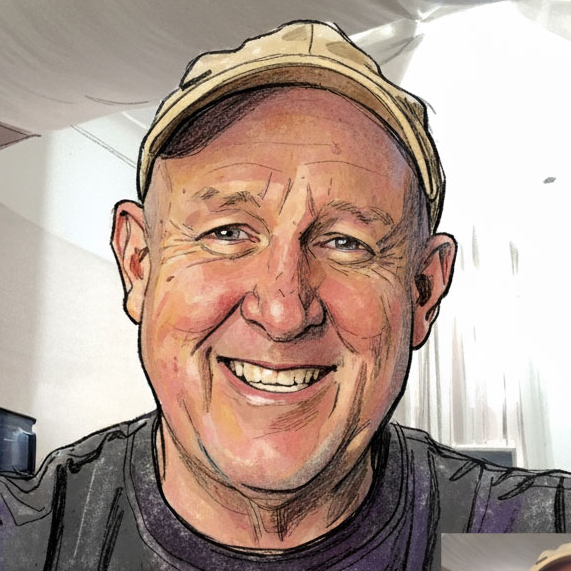
Eric Riley
Founder, GratiLabs
Eric Riley is the founder of GratiLabs, the US 501(c)(3) nonprofit behind GratGPT. He started GratiLabs to pair genuinely useful, privacy-first online tools with a culture of everyday gratitude, directing 100% of the site's ad revenue to global gratitude initiatives. Eric oversees GratGPT's tools and editorial content. Learn more about us or read our Editorial Policy.